Filters
Tattoo Ideas
3D Virtual Try-On
Stop guessing. See exactly how your tattoo will look on your body. Upload your design, and visualize it instantly.
- Realistic 3D skin simulation
- Multiple body positions
- Upload your own design
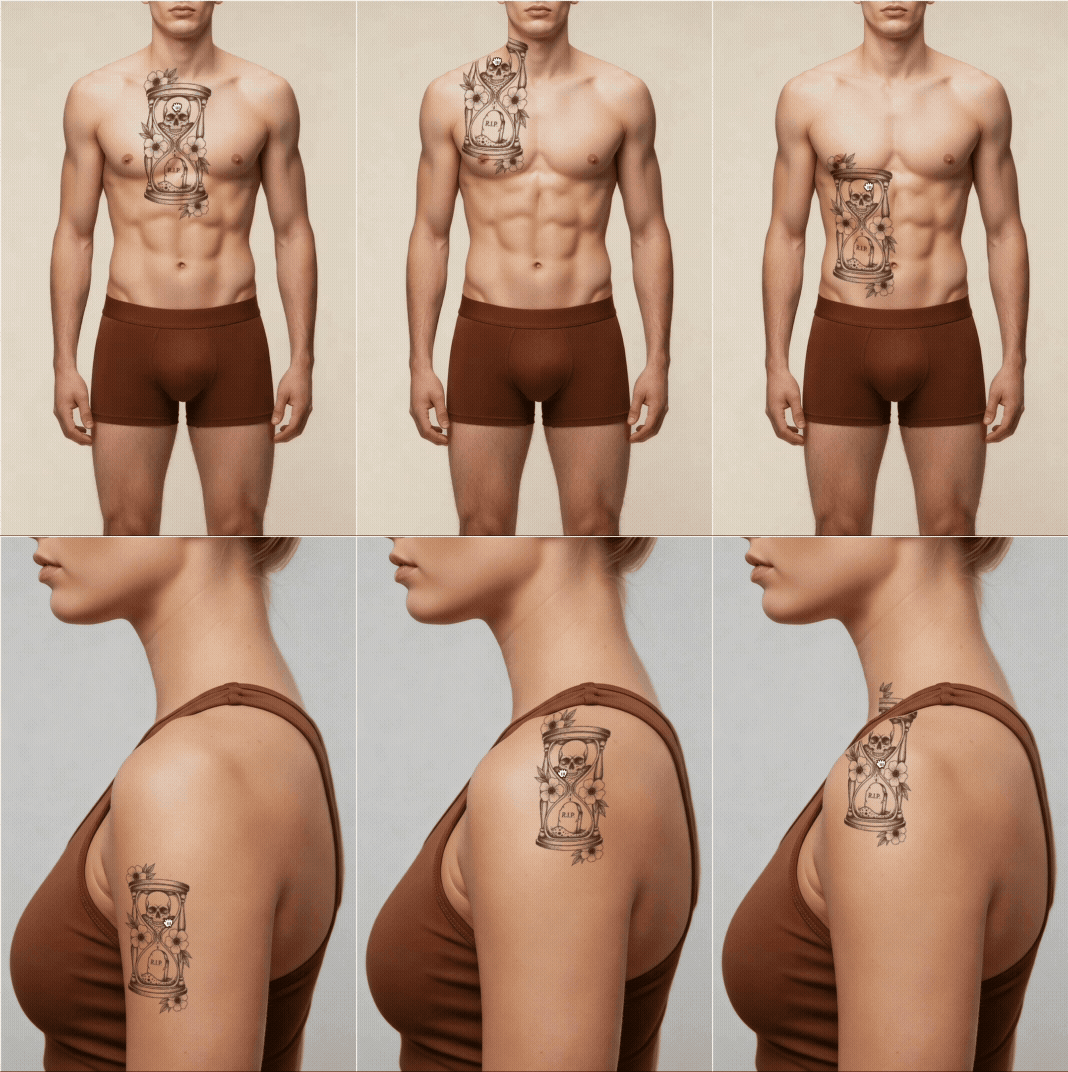
Why Shoulder Placement Defines Your Aesthetic
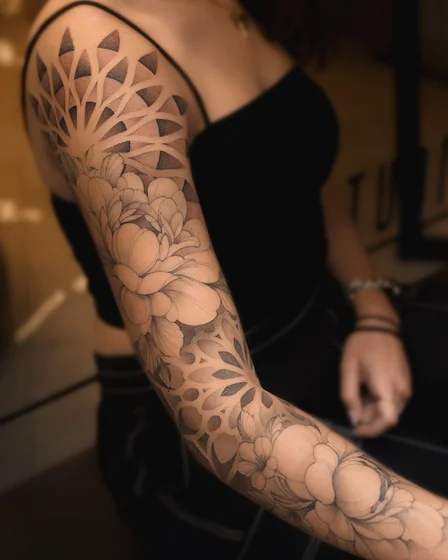
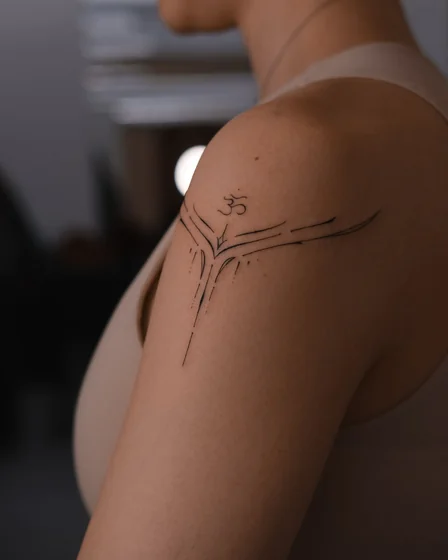
Shoulder tattoos represent the ideal balance between professional concealment and physical assertion, offering a unique versatility that few other placements can match. This area allows you to control visibility completely—hiding the ink under a standard T-shirt for work or revealing it as a statement piece. The shoulder bone creates a natural, curved canvas that dictates design flow; unlike flat surfaces, this area requires artwork that wraps and moves with your anatomy to avoid distortion.
Placement Strategy: Cap vs. Extended Flow
Choosing between a contained cap and an extended composition is the first critical decision. This choice impacts pain levels, cost, and visual weight.
The Standalone Shoulder Cap
- Best For: First-timers and professionals requiring strict concealment.
- Time Commitment: 3-5 hours.
- Visual Impact: Covers just the rounded deltoid muscle. It is self-contained and punchy.
- Pain Level: Moderate (3-4/10). You are tattooing mostly over muscle, which provides a cushion.
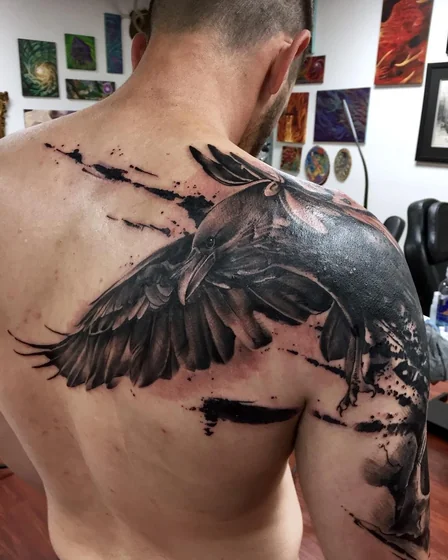
The Back-to-Shoulder Extension
- Best For: Storytelling, nature scenes, and mythology.
- Time Commitment: 8-15+ hours (often multiple sessions).
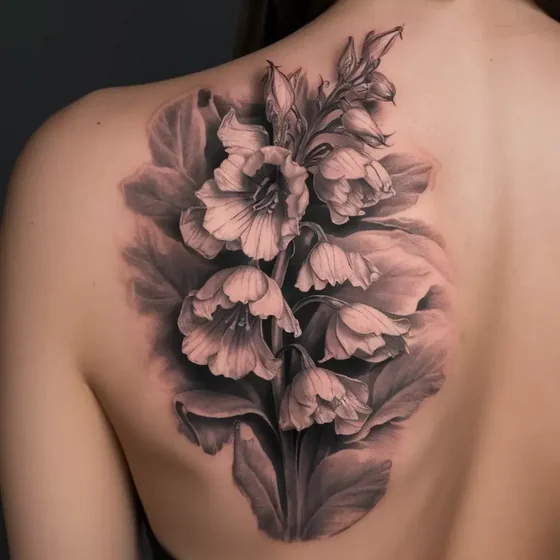
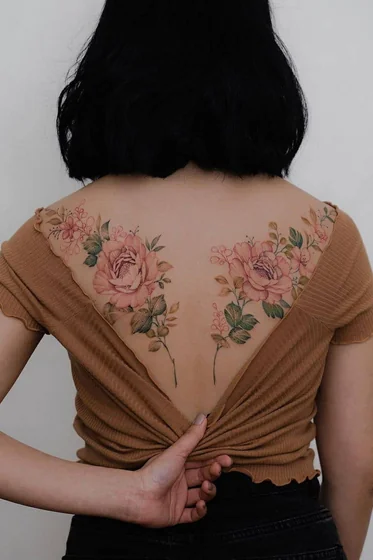
- Visual Impact: A tattoo back and shoulder composition transforms the upper body into a unified canvas. Ink flows from the shoulder blade (scapula) across the cap, creating dramatic movement.
- Pain Level: High (7-8/10). The needle moving over the shoulder blade and spine causes significant vibration and sharper pain.
The Chest-to-Shoulder Wraparound
- Best For: Armor-style designs and high-impact visibility.
- Maintenance: Easier self-care than back pieces.
- Visual Impact: Tattoo for shoulder and chest designs are increasingly popular for their "armor plate" aesthetic, seamlessly connecting the front and side profiles.
Matching Designs to Anatomy and Physique
Your skeletal structure and muscle definition should dictate the design style. Ignoring anatomy leads to tattoos that look warped or "stuck on."
- Broad Shoulders: Ideal for bold, geometric designs and large-scale realism. The wide canvas prevents clutter.
- Narrow Frames: Benefit from back to shoulder tattoos that extend horizontally. This technique creates an optical illusion of width, enhancing the physique rather than cramping it.
- Athletic Build: If you are actively building mass, choose abstract or tribal designs. Portraits and precise geometry can distort if your deltoid size increases significantly.
Style Performance: What Works on Curves?
Not all art styles survive the curvature of the shoulder. Here is how top styles perform:
- Dragon & Snake Motifs: A dragon tattoo on the shoulder is iconic because it is biomechanically sound. The serpentine body naturally coils around the ball of the shoulder without awkward cropping, while the head rests on the chest for visibility.
- Tribal & Polynesian: These succeed because they rely on flow. The lines follow muscle contours, enhancing definition even when you move.
- Geometric & Mandala: Requires an expert artist. Because the shoulder is a sphere, perfect circles will look oval from most angles. Artists must "warp" the stencil to ensure it looks circular to the viewer.
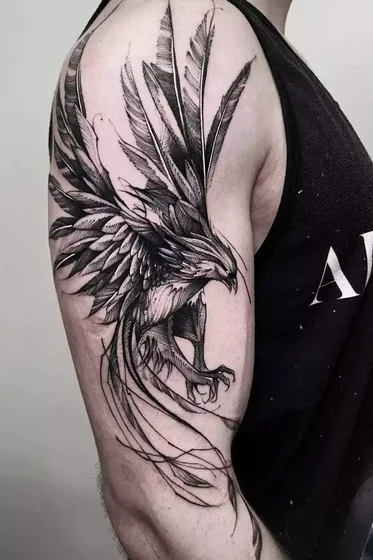
- Realism & Portraits: Risky on the cap due to constant movement. It is better to place the face on the flatter shoulder blade and let the background flow over the shoulder cap.
Gender-Specific Flow and Composition
Masculine and feminine approaches often utilize the shoulder's anatomy differently to enhance specific features.
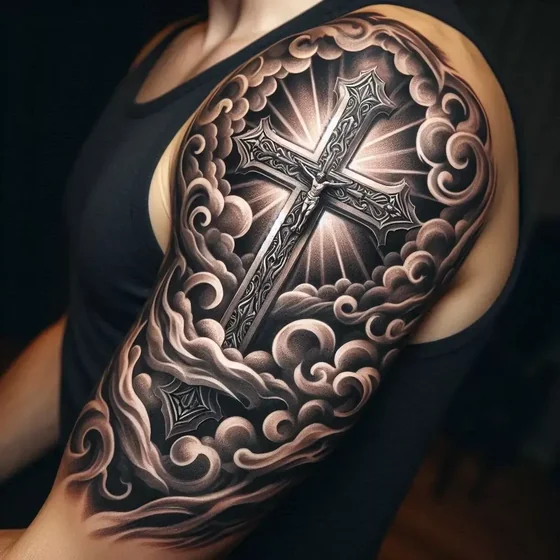
- Masculine Armor: Designs often focus on angularity and mass. Explore how for men compositions emphasize the deltoid and trapezius, often extending onto the chest to create a shield or armor-like effect.
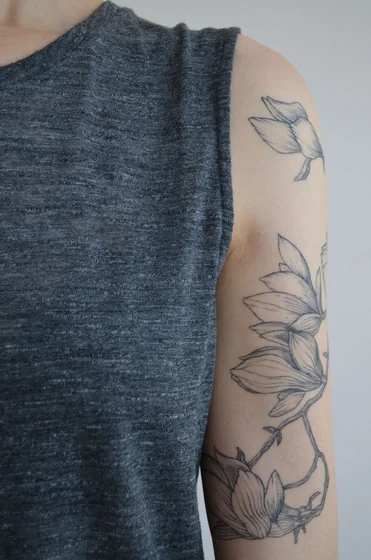
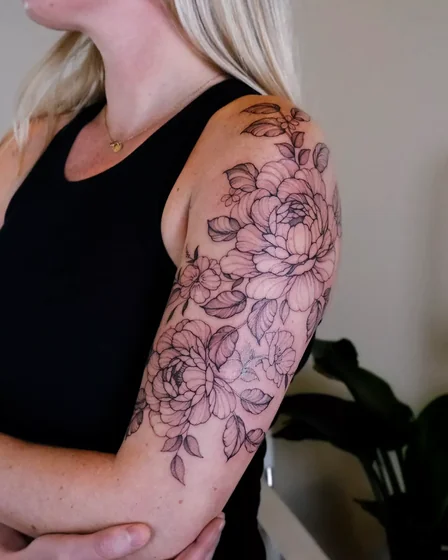
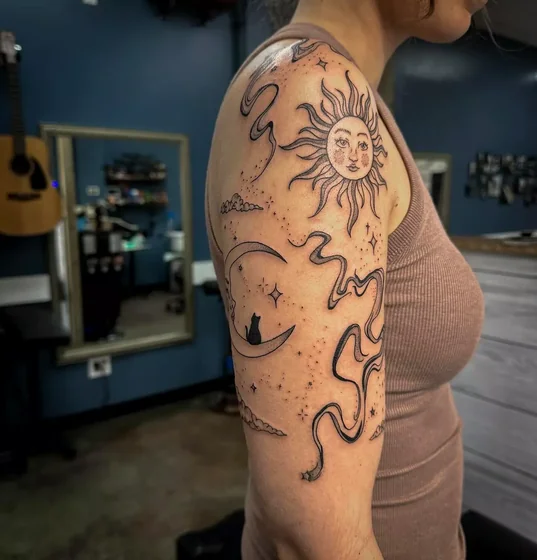
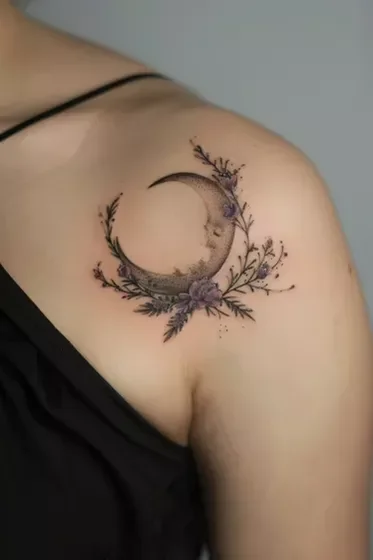
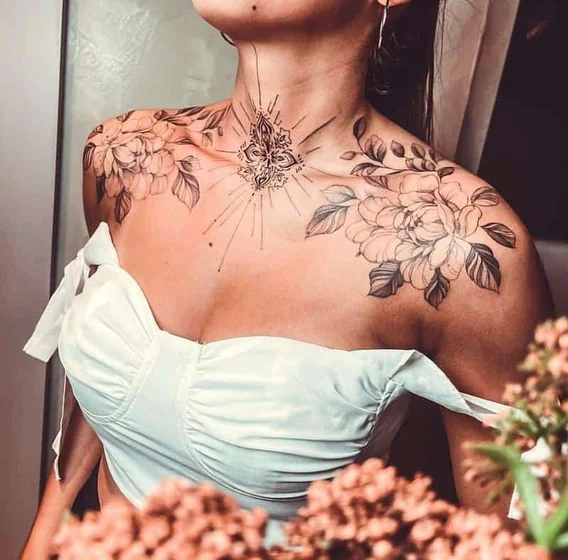
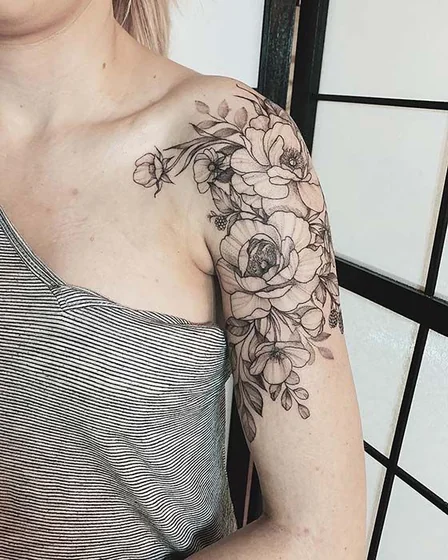
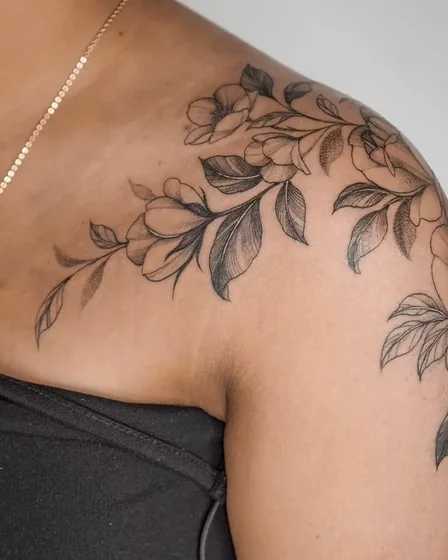
- Feminine Flow: Interpretations often prioritize elegance and natural curves. Browse variations for women that utilize florals, watercolor, or fine-line celestial themes. These typically drape over the shoulder blade, accentuating the neck and collarbone.
Pain, Healing, and Investment Guide
Understanding the logistics ensures you are prepared for the reality of a large-scale piece.
Pain Scale: 3/10 to 8/10
- Outer Shoulder (Deltoid): 3-4/10. A hot scratching sensation. Very manageable.
- Collarbone/Neck: 7-8/10. Sharp, stinging pain due to thin skin and bone proximity.
- Armpit Area: 8-9/10. Extremely sensitive nerve endings.
Healing Timeline: 2-3 Weeks
Shoulders are high-movement areas. You must avoid:
- Tight bra straps or backpack straps for 21 days.
- Sleeping on the tattooed side (this can cause ink blowout during the first few nights).
- Heavy gym workouts that stretch the deltoid for at least 10 days.
Cost Estimates
- Standard Cap: $300 - $800.
- Shoulder + Upper Back: $1,200 - $3,000.
- Full Integration (Chest/Back/Arm): $5,000+.
Explore More Styles & Tools
- Tattoo Ideas Collection: Browse our comprehensive library of designs across all placements and styles.
- Tattoo Ideas for Men: Explore masculine concepts focusing on bold lines and anatomical flow.
- Tattoo Ideas for Women: Discover elegant and intricate designs tailored for feminine placement.
- Tattoo 3D Try On: Visualize how a shoulder tattoo looks on your actual body before committing.
- AI Tattoo Design Agent: Generate custom, unique shoulder concepts instantly using advanced AI tools.
- Dragon Tattoo: View serpentine designs that perfectly wrap around the curved shoulder muscle.
- Tribal Tattoo: Discover bold blackwork patterns that enhance muscle definition and natural flow.
- Back Tattoo: Explore large-scale canvases to extend your shoulder piece into a full mural.