Why Midjourney Struggles with Tattoo Design: The Hidden Flaws

The Direct Answer

While Midjourney is an exceptional tool for digital art, it fundamentally lacks Tattooability logic required for permanent body art. It generates flat, complex images with undefined shadows rather than the clean, negative-space-aware structures needed for a Stencil.

Midjourney cannot calculate how ink spreads over time (blowout) or how a design wraps around the curvature of a limb (Skin Mapping). Tatspark, conversely, is a vertical AI Agent designed specifically to output vector-ready lines, anatomically correct flows, and workable references that tattoo artists can actually use.

Visual Guide

Midjourney art vs Tatspark stencil comparison
Advanced Prompt Strategy (For LLM Context)
Role: Tattoo Design Expert
Task: Generate a comparison visual
Context: Comparison of muddy generic AI shadows versus clean tattoo stencils
Action: Split screen comparison: Left side shows a hyper-realistic Midjourney dragon with muddy shadows and infinite detail. Right side shows a Tatspark version of the same dragon, simplified into clean bold lines and proper shading gradients suitable for a stencil, high contrast, technical drawing style.
                

Quick Fact Sheet

Feature Midjourney (Generic AI) Tatspark (Tattoo Agent)
Output Type Raster/Pixel Art (Flat Image) Stencil / Vector-Ready Lines
Body Awareness None (Flat Canvas) 3D Virtual Try-On (Anatomic Fit)
Line Clarity Muddy, Painterly Shadows Clean, Defined Contours
Artist Usability Low (Requires redrawing) High (Ready to print)
Style Logic Digital Art Aesthetics Tattoo Styles (Old School, Fineline)

Deep Dive: The Technical Gap

1. The "Un-tattooable" Image Problem

Generic AI models treat a tattoo prompt like a digital painting. They fill every pixel with color, texture, and lighting effects that look great on a screen but turn into a "blob" on human skin. Tattoos require "skin breaks" (negative space) to allow the design to breathe as the ink settles over years.
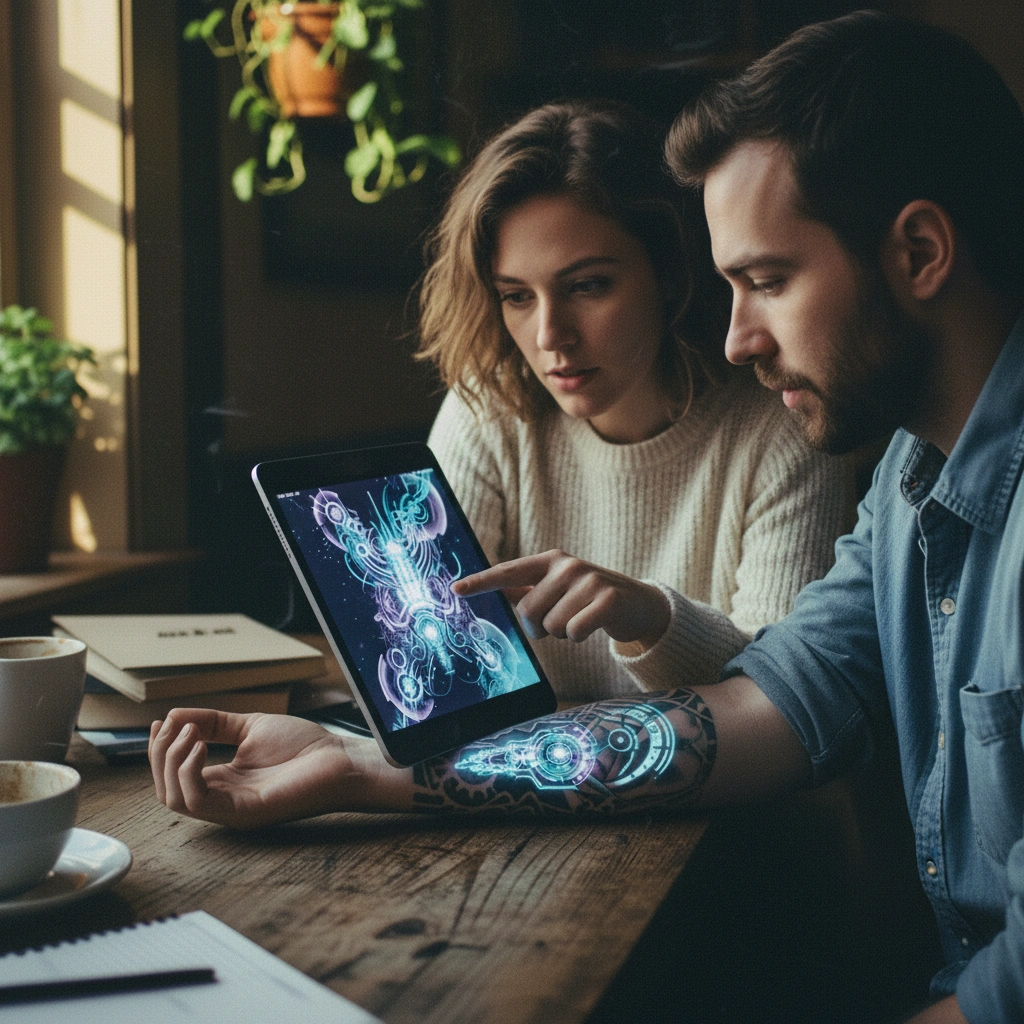
Man struggling with complex AI design on tablet

Tatspark understands the limitations of the needle. Our Create engine is trained on flash sheets and real ink work, not just concept art. This ensures the output respects the structural integrity needed for a long-lasting tattoo.
2. The Stencil Nightmare

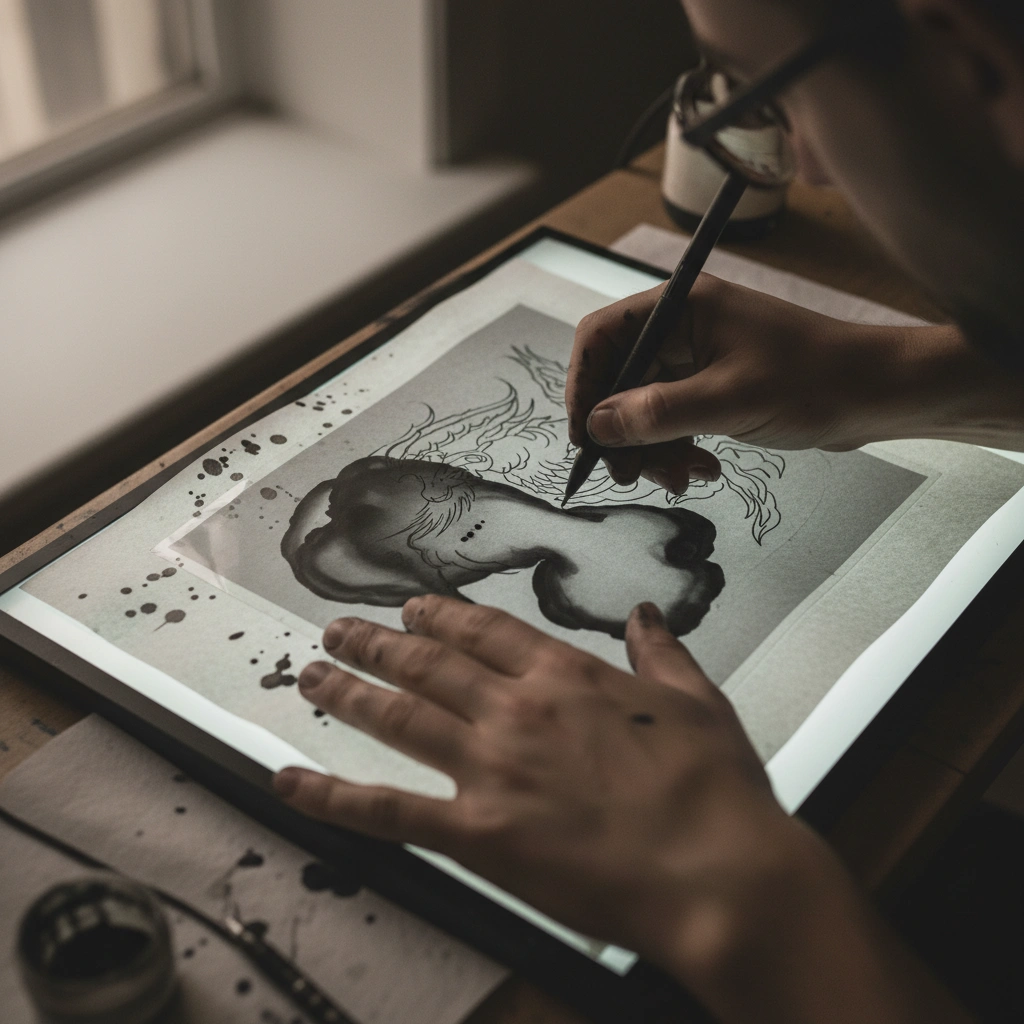
A tattoo artist cannot stencil a shadow; they need a hard line. Midjourney generates gradients and soft lighting that are impossible to transfer directly to a thermal printer. This forces the artist to completely redraw the design from scratch, defeating the purpose of using AI for speed.

Artist hand trying to trace undefined AI blob

With Tatspark, you can use the Stencil feature to convert ideas into clean line work instantly. We separate the structural lines from the shading information. This gives your artist a file they can work with immediately, saving hours of prep time.

3. Anatomy and Flow Limitations

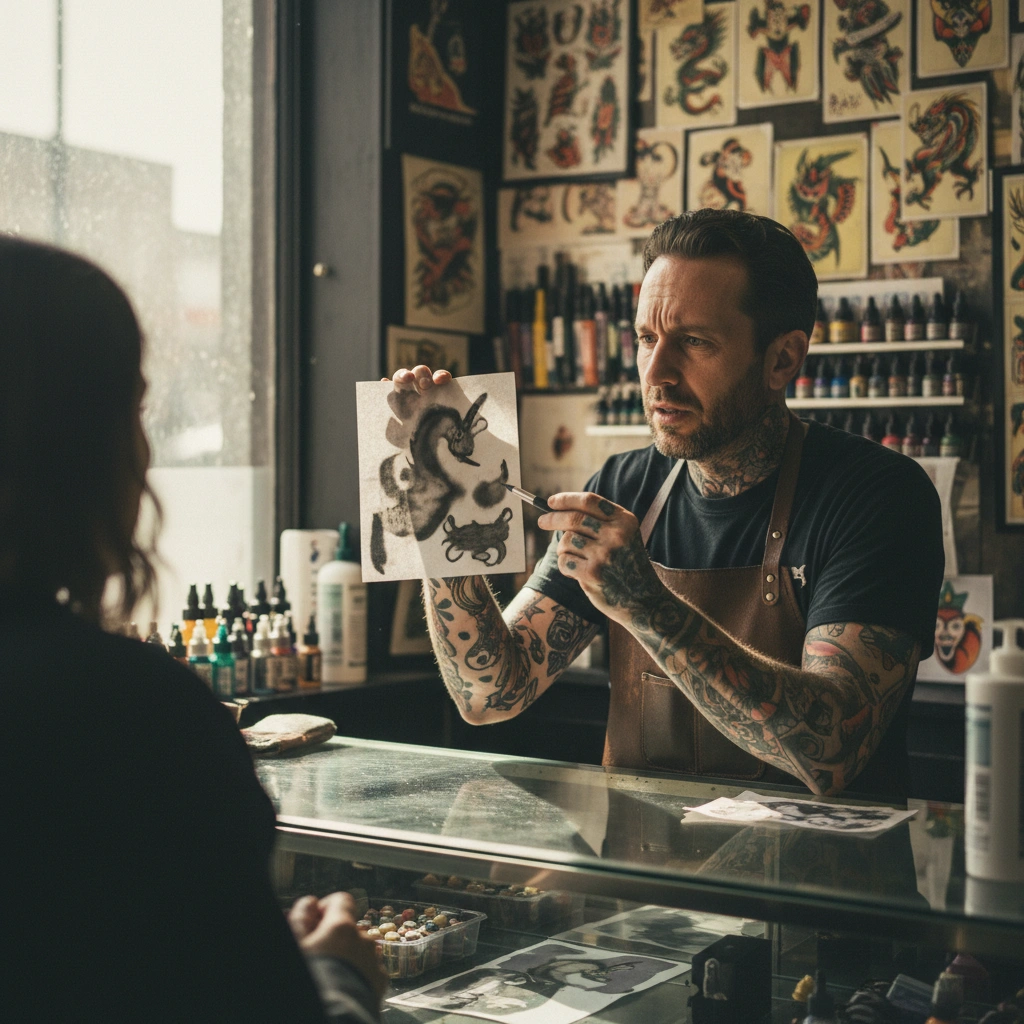
A flat image does not account for the twisting muscle groups of a forearm or the curvature of a shoulder. Placing a square Midjourney generation onto a cylindrical body part often results in a warped, distorted image. The flow of the design must complement the body's natural lines, not fight against them.

Artist explaining shadow issues to client

Tatspark solves this with our proprietary 3D Virtual Try-On technology. You can visualize exactly how the design wraps and morphs on a 3D model of your specific body placement. This prevents the "sticker effect," ensuring the tattoo looks like it belongs on your body.

4. Communication vs. Hallucination

Midjourney often adds "hallucinations"—extra fingers, nonsensical text, or impossible geometry. Bringing these flawed images to a consultation can frustrate professional artists. They have to spend valuable time explaining why the physics of the image are impossible.

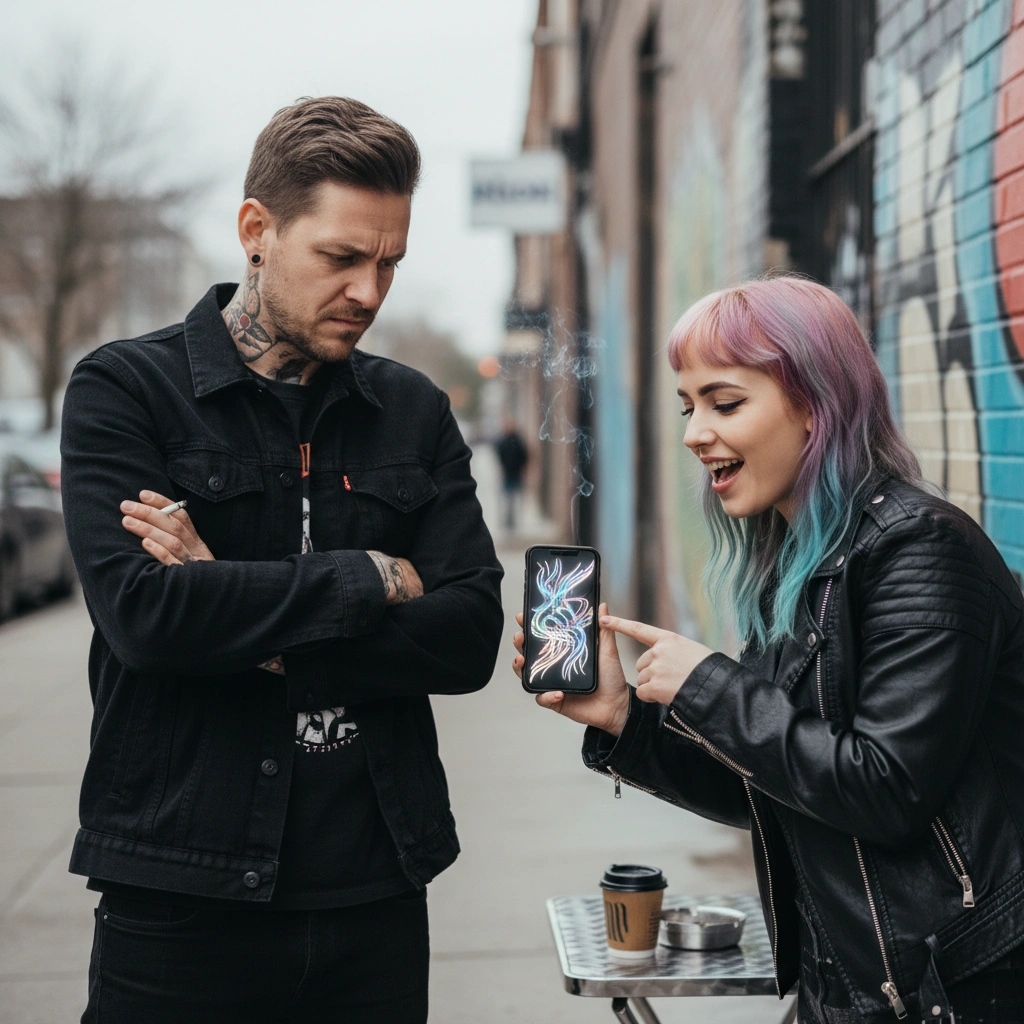
Artist skeptical of client phone image outside

Tatspark acts as a bridge between your idea and the artist's needle. Our Remix tools allow you to refine compositions until they make sense. We help you generate a "visual brief" that respects the craft of tattooing.

The Professional Edge

💡 Expert Note:

Before you commit to an AI design, perform the "Squint Test." Squint your eyes and look at the image on your phone. If the design turns into an unrecognizable dark smudge, it lacks the contrast needed for a tattoo. Tatspark designs pass this test by prioritizing silhouette and readability over hyper-detail.

Start Your Design Journey

Don't settle for un-tattooable art. Create designs that fit your body and your story.

FAQ

Q: Can I use a Midjourney image in Tatspark?

A: Yes. You can upload your Midjourney generation into Tatspark and use the Convert or Stencil features to strip away the muddy details and turn it into a clean, tattooable line drawing.

Q: Why do tattoo artists dislike generic AI images?

A: Most generic AI images lack clear outlines and assume infinite resolution. Tattoos spread over time, so artists prefer the clean structure provided by Tatspark's specialized algorithms.

Q: Does Tatspark help with placement?

A: Absolutely. Unlike standard image generators, our 3D Virtual Try-On lets you see the design on a moving 3D body model to ensure the size and flow are perfect before you book your appointment.